
Read the latest small business news written by me at my home business newsdesk. Get my updates sent to you via email by signing up on this page.
I’m Dan, a freelance small business journalist and event/podcast host with 20+ years of experience. If you’re looking for small business-focused content or an engaging event host, I’d love to help. Get in touch.
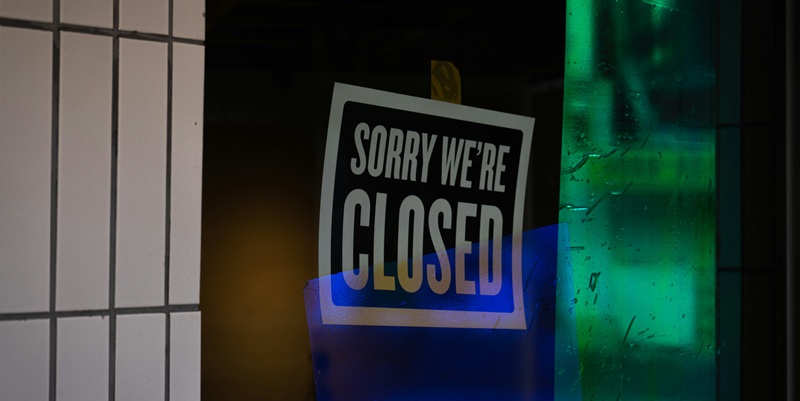
Pressure builds on government to tackle impact of business rates as figures reveal more than 200 pubs have closed in 2025
Eight pubs a week closed down in England and Wales during the first half of the year amid rising tax, labour and running costs.
Official government figures showed 209 pubs were demolished or converted for other uses during the six months to June.
This means 2,283 pubs have shut down for good in England and Wales forever since the start of 2020.
The figures were analysed by commercial real estate specialists Ryan.
Alex Probyn, the firm’s practice leader of property tax, said:
“Slashing business rates relief for pubs from 75 per cent to 40 per cent this year has landed the sector with an extra £215 million in tax bills.
“For a small pub, that’s a leap in the average bill from £3,938 to £9,451 – a 140 per cent increase.
“The combination of soaring business rates, higher national insurance contributions, the rising national minimum wage and packaging taxes are all quietly draining profits until staying open becomes impossible.
“When that happens, developers are quick to snap up the plots for more lucrative uses.”
Pressure on government to take action in Autumn Budget
The figures come as several groups call on chancellor Rachel Reeves to tackle the impact of business rates on hospitality and retail businesses in her Autumn Budget, which is likely to take place in late October or early November.
The Association of Convenience Stores (ACS) has launched a campaign urging retailers to write to their local MP calling for action on business rates.
ACS is calling for the government to reduce the retail, hospitality, and leisure multiplier by the full 20p. It says the potential removal of the current 40% relief for small retailers will leave many businesses exposed to much higher rates.
It also says Reeves should increase small business rate relief thresholds, as with business rates being revalued this year, small retailers, especially those in secondary or rural locations, face significant increases. The group says existing relief thresholds (£12,000 and £15,000) are no longer sufficient.
Finally, ACS says improvement relief should be extended from 12 months to three years to incentivise investment and exclude essential equipment from the rating list, such as CCTV which is needed for preventing shop theft and violence towards shopworkers.
ACS has published a template email for retailers to send to the MP here.
UKHospitality is also calling for measures from the government.
It says the 2024 Budget was “a hammer blow to hospitality”, with the sector losing 84,000 jobs, three times that seen in the wider economy, since the government’s announcements.
Its recent survey of hospitality businesses showed a third are operating at a loss, 76% have had to increase prices, 63% have reduced the hours available to staff, a third are restricting opening hours, and four in 10 have reduced investment.
The organisation is calling for lower business rates, the extension of exemptions for National Insurance increases and a cut in VAT for hospitality businesses.
Kate Nicholls, chair of UKHospitality, said:
“In the years following the financial crisis we created one in five net new jobs and today employ 3.5 million people. The government needs sectors like hospitality to create jobs and meet their ambition to get more people back into work.
“We have a proven track record of being able to deliver those jobs in every part of the country and for people from all backgrounds.
“The NICs change was socially regressive and had a disproportionate effect on entry level jobs. Without a change of tack from the government we could be looking at over 150,000 fewer workers in hospitality, when we should be bringing people into the jobs market.
“The economy needs jobs. Hospitality creates them. But we are being taxed out.”
Report reveals ‘alarming’ failure rate for female-led start-ups in Scotland
Scotland is missing out on a £17billion boost to its economy due to an “alarming” failure rates of businesses run by women entrepreneurs.
Although women-led business start-ups are now 54% of all start-ups in Scotland, 61% are failing to scale and female-led employer businesses have dropped to just 20% of the total, according to the report by Women’s Enterprise Scotland (WES).
The study said despite successive Scottish governments committing to inclusive growth and women’s entrepreneurship, female entrepreneurs have “not benefited from long-term investment in support provision anywhere near the levels seen in other areas of business”.
It claimed that tackling the issue has the potential to unlock an estimated £17billion reward for the Scottish economy every year.
Carolyn Currie, CEO of Women’s Enterprise Scotland, said:
“A perfect storm of economic conditions and structural inequalities is halting the progress of women-led businesses, despite their start-up successes.
“What we are seeing is an alarming number of new women-led businesses failing to thrive. They are simply falling into an abyss, leaving their economic potential and the ambitions of their founders unfulfilled. The WES survey reveals a clear demand for needs-based business support
“We can continue to watch talented women entrepreneurs leave the market, taking billions in economic potential with them, or we can implement the evidence-based solutions this study provides. The choice is clear — the community has spoken, and we need to listen. The time for action is now.”
The survey found that economic conditions are threatening business sustainability for women-led companies. It said 78% cannot recover all their increased costs, 41% cannot recover any cost increases,and 55% are using personal savings to capitalise their businesses.
It also highlighted inequities in COVID-19 business relief distribution, with women-led businesses receiving only 10.6% of grant funds, despite comprising 15.4% of all businesses.
The study said experiences of discrimination have doubled since 2016, with 68% of survey respondents reporting that they had experienced discrimination as a woman business owner.
Key challenges included funding inequalities, with women-led businesses receiving just 2.8% of equity investment; caring commitments, with 29% starting up to work around care responsibilities; support mis-match, with 58% saying mainstream support does not meet their needs, and a digital divide with just 15% being able to access relevant funding, despite 78% wanting digital investment.
WES’ recommendations included:
- nationwide coverage of expert, women-centric business support through digital and hybrid models
- structured mentorship and role model programmes
- strengthened financial support and investment access
- mandated gender-disaggregated data collection for 100% of publicly funded business grants and investment
Government cancels extra border checks on animal products from the EU
The introduction of extra border checks on live animal imports from the EU into the UK have been suspended ahead of a new UK/EU deal.
The government said it is also cancelling new checks on specific animal and plant goods from Ireland, due to the forthcoming SPS (sanitary and phytosanitary) deal with the EU.
First confirmed May as part of the government’s efforts to “reset” relations between the UK and EU following Brexit, the deal will establish “a UK-EU sanitary and phytosanitary zone” which “cuts costs and red tape for businesses that export and import from the EU, reducing delays at the border, and making food trade with the UK’s biggest market cheaper and easier”.
Under the agreement, the details of which are still being finalised, the extra border checks will not be required, because their implementation is “disproportionate”.
Some live animals imported from the EU will continue to be inspected at their place of destination based on a series of risk factors.
Biosecurity minister Baroness Hayman said:
“Our deal with the EU will boost British businesses as we cut cumbersome bureaucracy and make trading food with our biggest market both cheaper and easier.
“Protecting the UK’s biosecurity is essential, and our partnership with the EU will ensure this.”
The suspension of new animal and plant product checks follows the announcement in June that border checks on EU fruit and veg imports have also been scrapped.
Grants for small businesses
The following grants are currently available:
The plug-in van and truck grant, which encourages the uptake of electric vans and trucks, has been extended until 2027. It provides discounts up to £2,500 for small vans, £5,000 for large vans, £16,000 for small trucks, and £25,000 for large trucks.
A grant fund of up to £3 million for farming, growing or forestry businesses based in England delivering on-farm trial and demonstration projects to improve adoption of new ideas or solutions in the agricultural sector.
Capital grants of between £5,000 and £25,000 for businesses in Powys.
Low carbon and digitisation/productivity grants for businesses in Doncaster.
Business growth grants for businesses in Stafford.
Grants of between £2,500 and £25,000 for rural businesses in Stratford-on-Avon District and North Warwickshire Borough.
Grants for tourism businesses in Malvern Hills.
Innovation grants of between £5,000 and £25,000 for businesses in Orkney, Shetland and the Outer Hebrides.
I’m Dan, a freelance small business journalist and event host with 20+ years of experience. If you’re looking for small business-focused content or an engaging event host, I’d love to help. Get in touch.
 Dan Martin